Key takeaways
- Knob-and-tube, cloth-covered cable and aluminum wiring are common in older homes.
- Each has its own weaknesses, including no ground and loose connections.
- Condition, insulation and added loads decide whether it is safe.
- A trained electrician can identify and advise on every type.
Knob-and-tube
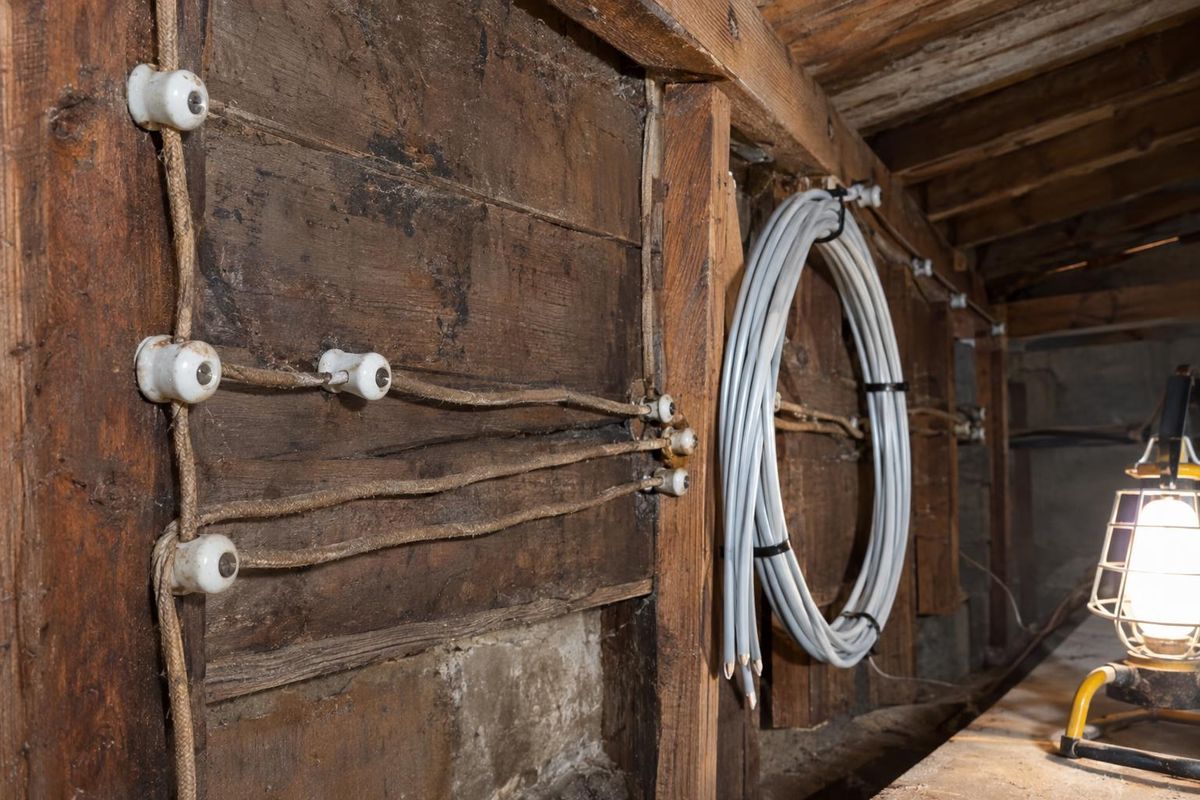
Used up to about the 1940s, knob-and-tube runs individual wires through the air on porcelain knobs and through joists in porcelain tubes. The wires are wrapped in cloth and rubber that may crack and flake with age. There is no ground, and insulation piled over the wires can cause overheating.
It is usually recommended to replace active knob-and-tube circuits.
Cloth-covered and early cable
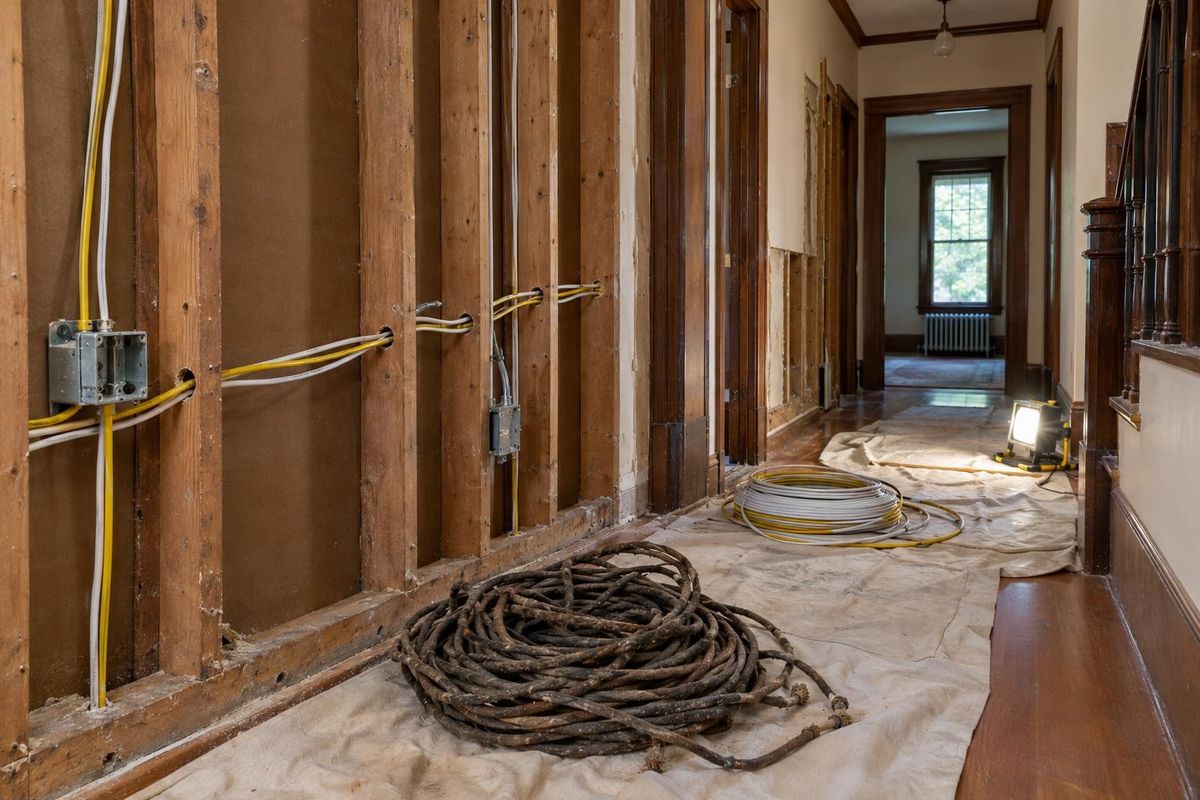
From the 1930s through the 1960s, cable with cloth or rubber insulation was common. The insulation can become brittle, and these circuits often lack grounds. Overloaded circuits and old splices add risk.
Inspection and often replacement are advised.
Aluminum branch wiring
In the 1960s and early 1970s, aluminum was used for branch circuits. Aluminum expands and contracts more than copper and oxidizes, which loosens connections at devices. Approved repairs, such as copper pigtails with the right connectors, make it safe.
Aluminum service wires in larger sizes are different and widely used.
What to do
Do not guess. Have an electrician identify the wiring, test it and recommend repairs, from connection fixes to full rewiring. Updating over time, starting with the most hazardous circuits, is often practical.
Tell your insurer what type of wiring your home has.
Quick answers
How can I tell what wiring I have?
Look at wires in the attic or basement, and at the labeling on cables. An electrician can confirm.
Can I leave old wiring alone?
Sometimes, if it is in good condition and not overloaded. A professional should judge.
Will I need to replace everything?
Not always. We explain options.