Key takeaways
- Lumens measure brightness, not watts.
- Color temperature runs from warm to cool and sets the mood.
- Dimmers must be compatible with LED bulbs and fixtures.
- Layered lighting works better than a single ceiling light.
Lumens, not watts
Watts tell you how much power a bulb uses. Lumens tell you how much light it makes. A sixty-watt incandescent bulb gave about eight hundred lumens, and an LED can deliver that using around ten watts. Choose by lumens, then enjoy the energy savings.
Bigger rooms and tasks like cooking and reading need more lumens.
Color temperature
Color temperature is measured in Kelvin. Around twenty-seven hundred is warm and cozy, suited to living rooms and bedrooms. Thirty-five hundred to four thousand is neutral, a good choice for kitchens and offices. Five thousand and above is cool and bright, suited to garages and workshops.
Use the same temperature within a room so fixtures match.
Dimming
Not every LED bulb dims, and not every dimmer works with LEDs. Mismatches cause flicker, buzzing and limited range. Look for bulbs marked dimmable and dimmers rated for LED loads. Smart dimmers handle many bulbs smoothly.
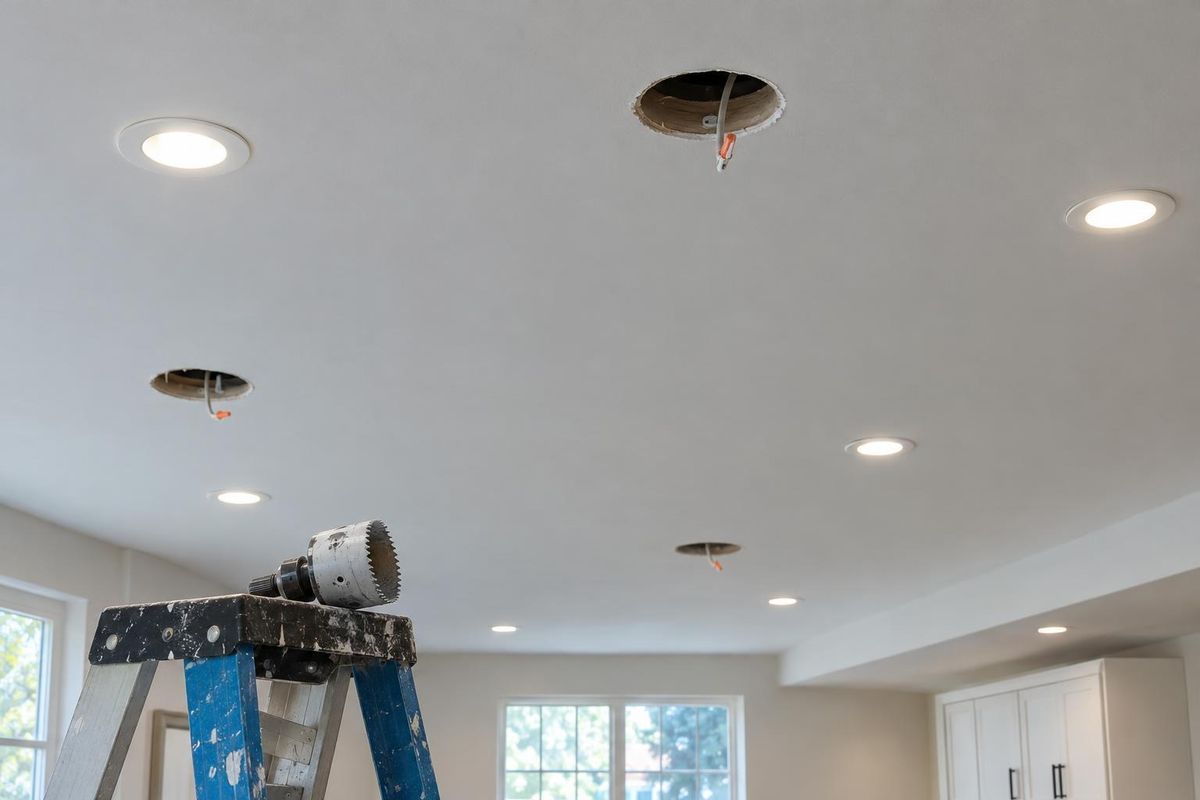
Recessed LED trims with built-in drivers dim well when matched.
Layers of light
Combine general light from ceiling fixtures, task light from under-cabinet strips and desk lamps, and accent light from sconces and cove lights. Place switches or smart controls so you can mix them.
Outdoors, warm fixtures with shields reduce glare and light pollution.
Quick answers
What brightness do I need in a kitchen?
Plenty, with task lights over counters. Many kitchens use several thousand lumens in total.
Why do my LEDs buzz?
Usually an incompatible dimmer.
Do LEDs last forever?
They last a very long time, but drivers and dimmers can fail earlier.